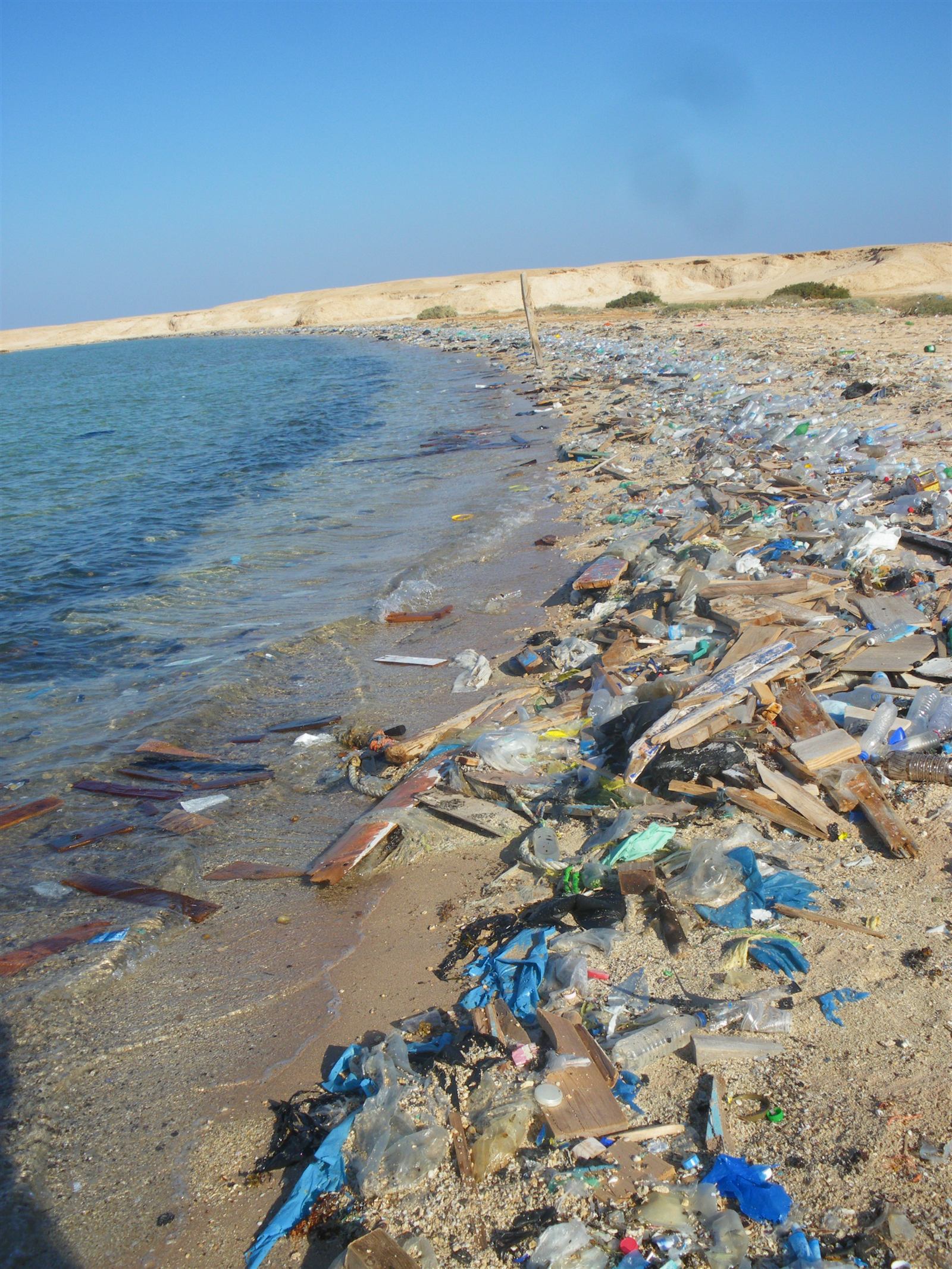
Plastic Pollution
For decades, plastic pollution was considered an environmental problem. New science reveals it has become a medical one too — with microplastic particles now found inside the human body at every stage of life.
We have been producing plastic at industrial scale since the 1950s. In that time, humanity has generated an estimated 9.2 billion tonnes of plastic — of which only 9% has ever been recycled. The rest has been incinerated, landfilled, or released into the environment, where it accumulates, fragments, and now, we know, enters living organisms — including us.
Microplastics are plastic particles smaller than 5 millimetres in diameter. They are formed in two main ways: as large plastic items — bottles, bags, fishing nets — break down under UV radiation, wave action, and temperature change; and as direct releases from manufacturing, synthetic textiles, and vehicle tyres.
Every time you wash a synthetic fleece jacket, it sheds an estimated 700,000 plastic microfibres into wastewater. Every kilometre driven on roads generates microplastic particles from tyre abrasion. These particles are now found in the deepest ocean trenches, Arctic sea ice, Himalayan snowpack, and the water we drink. In 2023, Japanese scientists detected microplastics inside clouds, carried by water vapour through the atmosphere and deposited via rainfall across entire continents.
The discovery of microplastics in human tissue has progressed rapidly since 2020, with peer-reviewed studies confirming their presence across multiple organ systems and life stages.
Italian researchers published the first peer-reviewed study detecting microplastics in human placentas. Particles of polyethylene, polypropylene, and PVC were found on both the foetal and maternal sides. The authors described their presence as "a matter of great concern." (Environment International)
Researchers at Vrije Universiteit Amsterdam detected microplastics in the blood of 77% of healthy adult donors — the first evidence of microplastic particles circulating in the human bloodstream. PET (from plastic bottles) was the most common type found. (Environment International)
UK scientists published findings of microplastics in living human lung tissue, including in the deeper lung regions previously thought inaccessible to particles of this size. Polypropylene and PET fibres were most common — likely inhaled from air. (Science of the Total Environment)
Microplastic particles were detected in human breast milk for the first time, raising questions about infant exposure from birth. The study found particles in 75% of breast milk samples tested. (Polymers)
Microplastics are not inert. They carry with them a cocktail of chemical additives used in plastic manufacturing — including phthalates, bisphenol A (BPA), and PFAS (per- and polyfluoroalkyl substances, commonly known as "forever chemicals"). Many of these are known endocrine disruptors: compounds that interfere with hormone signalling in the body.
In laboratory settings, microplastic exposure has been associated with cellular inflammation, oxidative stress, DNA damage, and disruption of reproductive hormones. At sufficient concentrations, they can cross the gut barrier, the blood-brain barrier, and — as the placenta studies show — even the foetal barrier. The long-term epidemiological consequences in humans are still being studied, but the WHO issued a call in 2023 for urgent further research and a meaningful reduction in plastic production at source.
The plastic crisis has both systemic and individual dimensions. Industrial-scale change is necessary — but individual choices also shift markets and reduce personal exposure.
The scale of the problem is vast, but the science is clear enough to demand urgent action — both from individuals willing to make different choices, and from governments and manufacturers with the power to change what is produced in the first place.